Precision Micros
Choosing among China’s top Brush Motors manufacturers requires more than comparing prices and catalog photos. A reliable decision begins with the motor’s actual working conditions. Consider voltage, torque, speed, duty cycle, noise, heat, brush life, and installation space. A motor running inside a small medical device faces different demands from one powering a conveyor or garden tool.
Experienced buyers usually request samples before approving large orders. Test them under realistic loads, not only on a clean laboratory bench. Measure starting current, operating temperature, vibration, and sound after extended use. Ask the manufacturer how brush materials, commutators, bearings, and winding methods are selected. Clear technical answers often reveal more than polished marketing language. Production records, quality-control procedures, traceability, and documented inspection results also deserve close attention.
Supplier verification matters. Review factory capabilities, engineering support, export experience, and relevant certifications for your target market. Check whether the manufacturer performs incoming-material inspection and end-of-line testing. Discuss tolerances, packaging, replacement parts, warranty terms, and response times before signing an agreement. Small details matter. A poorly protected shaft can arrive damaged. An unclear tolerance can create costly assembly problems.
No checklist is perfect. Even a respected supplier may miss a requirement or struggle with a custom design. Keep written specifications, approve a golden sample, and define acceptance criteria clearly. Independent testing can provide additional confidence when the application is safety-sensitive or high-volume. The best choice is not always the cheapest factory. It is the manufacturer that combines consistent Brush Motors performance, honest communication, practical engineering, and evidence that supports every important promise.
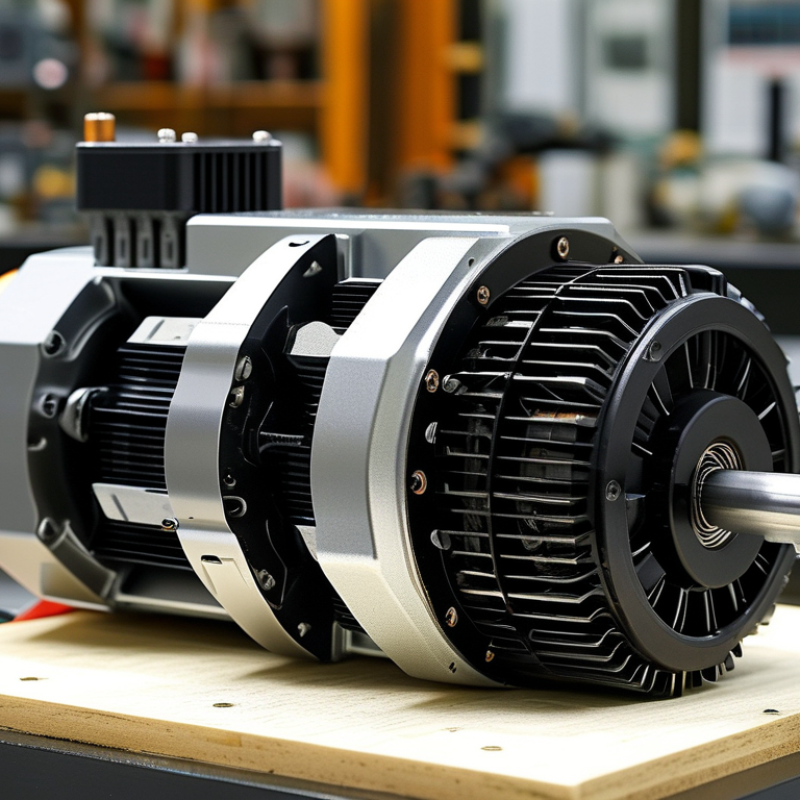
A brushed motor uses a wound rotor, permanent magnets, a commutator, and carbon brushes. The brushes transfer current while the commutator changes polarity. This simple contact system produces immediate starting torque and easy speed control. It also creates friction, electrical noise, and gradual brush wear.
Why are brushed motors still widely used in China? They suit power tools, small pumps, toys, fans, automotive actuators, and compact gear drives. Their structure is familiar to local production teams. China also has broad supply networks for magnets, copper wire, bearings, brushes, and stamped components. The International Energy Agency reports that electric motor systems consume about 53% of global electricity. The U.S. Department of Energy reports that motor systems can represent over 70% of industrial electricity use. Efficiency and service life deserve serious attention.
When choosing a Chinese manufacturer, request load curves, temperature-rise data, brush-life testing, and noise measurements. Check the rated voltage, starting torque, duty cycle, shaft load, and operating temperature. A motor may look strong on a bench but fail inside a dusty gearbox. Inspect the commutator finish and brush seating. Ask for traceable test records, not only a catalog value. A lower price can hide shorter brush life or inconsistent winding resistance. That assumption is sometimes wrong. The best choice depends on the application, not the factory location.
China’s brush motor manufacturers produce several practical motor types for appliances, tools, pumps, and compact automation. Permanent-magnet brushed DC motors offer simple speed control and strong starting torque. They suit window lifters, small fans, valves, and battery-powered equipment. Gearmotors add reduction gearing for slower movement and higher output torque. Check the gearbox noise, shaft load, and duty cycle carefully.
Universal motors run on AC or DC and deliver high speed in mixers, drills, and cleaning machines. They are compact but can create more noise, vibration, and brush wear. Coreless brushed motors respond quickly and reduce rotor inertia, making them useful for miniature pumps, medical instruments, and precision mechanisms. Shunt, series, and compound motors remain relevant in larger equipment, although their applications differ sharply.
Market evidence supports careful selection. Grand View Research’s 2024 analysis projects the global DC motor market to grow at roughly 7% annually through 2030. The International Federation of Robotics reported 276,288 industrial robots installed in China during 2023, representing about 51% of global installations. This automation demand increases interest in compact, controllable motors. Yet market growth does not guarantee quality. Ask manufacturers for life-test records, brush material details, thermal data, and load-test curves. A certificate alone is not enough. No selection method is perfect; some suppliers may provide incomplete test conditions, so buyers should request repeatable samples before approving production.
Evaluating China’s top brush motor manufacturers starts with evidence, not polished catalogs. In factory audits, I check whether winding data, commutator materials, and brush grades match the drawings. Ask for recent production samples. Compare shaft runout, no-load current, torque, noise, and temperature rise under identical loads. Small differences matter. A motor that sounds smooth for two minutes may develop visible brush dust after extended testing.
A capable supplier explains its process clearly. Request incoming inspection records, coil balancing results, life-test curves, and failure analysis reports. Review equipment calibration dates. Visit the assembly line if order volume justifies travel. Watch operators measure commutator concentricity, not merely assemble parts. Ask how design changes are approved and traced. Reliable manufacturers can provide traceable batch numbers and consistent test conditions. Be cautious when reports lack test duration or ambient temperature. That omission may be innocent, but it weakens confidence.
Cost also needs context. Compare tooling, minimum order quantities, warranty terms, packaging, and replacement lead times. A low quoted price can hide unstable materials or expensive rework. Confirm compliance documents for your destination market, and verify them with issuing bodies when practical. Samples should run through your actual duty cycle, including starts, stops, load peaks, and dust exposure. I once treated a passing sample as proof of process control. That was too optimistic. Audit the supplier’s corrective actions after a failed test. Their response often reveals more than their sales presentation.
| Evaluation Dimension | Suggested Weight | What to Evaluate | Practical Reference or Target | Verification Documents or Tests | Score (1–5) |
|---|---|---|---|---|---|
| Application and Motor Specification Fit | 15% | Check rated voltage, speed, torque, power, duty cycle, rotation direction, shaft configuration, mounting, and operating environment. | The proposed motor should meet the required operating point without relying on continuous operation above its rated conditions. | Approved technical drawing, datasheet, torque–speed curve, sample test report, and application-load calculation. | — |
| Commutator and Brush Quality | 15% | Evaluate brush material, spring pressure, commutator finish, brush seating, sparking behavior, wear rate, and replacement accessibility. | Stable commutation, controlled temperature rise, low abnormal sparking, and a service life that matches the application duty cycle. | Material specifications, brush-life test, commutation inspection, thermal test, and endurance-test records. | — |
| Electrical Performance | 12% | Compare no-load speed, rated current, starting current, torque output, efficiency, speed regulation, and electromagnetic interference behavior. | Performance values should remain within the agreed specification at the defined voltage, load, and ambient temperature. | Dynamometer test data, winding-resistance records, current measurements, efficiency calculations, and EMC test reports where applicable. | — |
| Mechanical Construction | 10% | Review housing material, shaft strength, bearing type, concentricity, balancing, vibration, noise, and mounting accuracy. | The motor should withstand the specified radial and axial loads, vibration conditions, and installation tolerances. | Dimensional inspection, shaft-runout measurement, vibration and noise test, balancing record, and bearing specification. | — |
| Thermal Management and Insulation | 10% | Assess winding insulation, thermal protection, ventilation, heat dissipation, ambient-temperature limits, and temperature rise. | Insulation and temperature performance should be appropriate for the specified duty, enclosure, and ambient conditions. | Insulation-resistance test, dielectric-strength test, temperature-rise test, thermal-protection details, and insulation-class declaration. | — |
| Quality Management and Traceability | 12% | Review incoming-material control, process inspection, final testing, calibration, nonconformance handling, and batch traceability. | A documented quality system should connect raw materials, production batches, inspection results, and shipment records. | Current quality-management certificate, process-control plan, inspection records, calibration certificates, and corrective-action examples. | — |
| Sample and Validation Capability | 10% | Determine whether the manufacturer can produce engineering samples, modify tooling, document design changes, and support application validation. | Sample performance should be repeatable and conform to the approved drawing and specification before mass production. | Prototype approval report, first-article inspection, design-change procedure, test plan, and sample-to-production comparison. | — |
| Compliance and Export Documentation | 8% | Check product safety, restricted substances, labeling, packaging, customs information, and destination-market requirements. | Documentation should match the exact motor model, destination market, and applicable regulatory requirements. | Declaration of conformity where applicable, RoHS or material declaration, safety reports, labeling artwork, and export documents. | — |
| Production Capacity and Delivery Reliability | 5% | Evaluate equipment capacity, production planning, component availability, minimum order quantity, lead time, and surge-production capability. | Quoted lead times should be supported by realistic capacity planning and documented on-time delivery performance. | Capacity statement, production schedule, component lead-time list, delivery records, and business-continuity plan. | — |
| Total Cost and After-Sales Support | 3% | Compare unit price, tooling charges, freight, warranty terms, spare-brush availability, technical response time, and failure analysis support. | Select based on total cost of ownership rather than purchase price alone, especially where brush replacement or downtime affects operating cost. | Formal quotation, warranty policy, spare-parts list, service-level commitment, and corrective-action process. | — |
| Weighted Evaluation Result | / 5.0 | ||||
When comparing brush motor manufacturers in China, technical specifications should guide your decision. Start with rated voltage, no-load speed, rated torque, and continuous current. These figures reveal how the motor behaves in real equipment. Check starting torque too. It affects pumps, fans, locks, and other loads that resist movement.
Brush life deserves close attention. Ask for expected operating hours, brush material, commutator design, and replacement access. A motor may offer high speed but wear quickly under heavy loads. Compare efficiency, temperature rise, noise, vibration, shaft size, and mounting dimensions. Insulation class and protection ratings also matter in dusty or warm environments. Do not trust impressive numbers alone. In practical testing, a motor with slightly lower speed may deliver steadier torque and longer service. A clean datasheet can still hide important tolerances.
Tips: Request a sample and test it under your actual voltage and load. Record current, temperature, noise, and speed after continuous operation. Compare results with the manufacturer’s data. Ask how specifications were measured. Testing conditions are often different, and this detail is easy to overlook. Confirm production consistency through inspection records, load tests, and traceable quality procedures. A small mismatch in shaft length or mounting holes can create costly redesign work.
Selecting the right brush motor supplier in China requires more than comparing catalog prices. Start with your application data: rated voltage, running speed, torque, duty cycle, installation space, and expected service life. A supplier should explain how its motor handles startup current, temperature rise, brush wear, and electrical noise. Ask for measured test results, not only standard specifications.
Experience matters during sampling. Test the motor under your real load, including repeated starts and long operating cycles. Check vibration, sound, current stability, and output torque at different temperatures.
I once accepted a sample that performed well without load, but its speed dropped sharply under resistance. That mistake changed my evaluation process. A reliable supplier should support design adjustments, provide traceable quality records, and communicate clearly when a specification cannot be achieved.
Tips: Request at least two samples from the same production batch. Confirm whether the stated lifetime matches your duty cycle. Review inspection methods for commutators, brushes, bearings, and winding resistance. Also ask about tooling ownership, replacement parts, lead times, and production capacity. A low quotation may hide weaker materials or limited testing. Look closely. Suppliers with engineering teams, stable process controls, and transparent documentation are usually safer choices for demanding applications. Still, do not assume a large factory is always the best fit; response speed and technical cooperation can matter more.
: It uses a wound rotor, permanent magnets, carbon brushes, and a commutator. The brushes transfer current. The commutator changes polarity and creates rotation.
Their structure is familiar and easy to produce. They suit power tools, small pumps, fans, toys, and compact gear drives. Local supply networks can provide magnets, copper wire, bearings, and brushes.
It provides immediate starting torque and simple speed control. Its design is relatively easy to understand and repair. That simplicity helps many compact machines.
Brush contact creates friction, electrical noise, and gradual wear. The commutator may also require inspection over time. A motor can appear fine while its brushes are already wearing unevenly.
Compare rated voltage, no-load speed, rated torque, continuous current, and starting torque. Also check efficiency, temperature rise, noise, vibration, shaft size, and mounting dimensions. Small mismatches matter.
Ask for operating-hour estimates, brush material, commutator design, and replacement access. Request brush-life testing under realistic loads. High speed may shorten service life.
Test the motor at its actual voltage and load. Record current, temperature, noise, and speed during continuous operation. Compare these results with the supplier’s data. Testing conditions can differ.
Request load curves, temperature-rise data, noise measurements, and traceable test records. Check winding resistance, shaft dimensions, mounting holes, and inspection results. A clean catalog value is not enough.
Not necessarily. A lower price may hide shorter brush life or inconsistent winding resistance. That assumption can fail. Choose according to the application, not only the factory location.
Choosing the right China brush motor manufacturer requires more than comparing prices. Brush Motors are widely used because they offer simple control, strong starting torque, easy speed adjustment, and cost-effective performance in many industrial, automotive, household, and automation applications. Chinese manufacturers commonly produce permanent magnet, series-wound, shunt-wound, and geared brush motors, each suited to different load, speed, torque, and operating requirements.
Buyers should evaluate manufacturers by reviewing production capability, quality control systems, engineering experience, testing procedures, customization support, delivery reliability, and after-sales communication. Important technical specifications to compare include rated voltage, power, torque, speed, current, efficiency, duty cycle, noise, vibration, brush life, thermal performance, and installation dimensions. The best supplier is one that understands the application, recommends a suitable motor structure, provides accurate samples and documentation, and can maintain consistent quality during mass production. A careful comparison of technical performance, total cost, reliability, and service capability will help buyers select the most suitable Brush Motors supplier for their needs.
