Precision Micros
Choosing Asynchronous Motors for global sourcing requires more than comparing catalog prices. These motors must match the application, electrical network, climate, and maintenance capability. As drive engineer Austin Hughes observed, “The induction motor is the workhorse of industry.” That description remains practical because asynchronous designs power pumps, compressors, conveyors, fans, and machine tools worldwide.
A reliable selection begins with the motor’s duty cycle. Check rated voltage, frequency, speed, starting current, torque, efficiency class, and enclosure rating. A 400 V, 50 Hz motor may not suit a 460 V, 60 Hz installation without careful verification. Review IEC or NEMA dimensions, shaft tolerances, terminal-box positions, insulation class, and bearing arrangements. In a humid plant, IP55 protection may be insufficient if washdown exposure is frequent. Salt air can also accelerate corrosion around unprotected frames and fasteners.
Sourcing evidence matters as much as technical data. Request routine test reports, efficiency measurements, material details, warranty terms, and spare-parts availability. Confirm whether the supplier can support variable-frequency-drive operation. Ask for vibration limits and sound readings, especially near occupied work areas. A factory video is useful, but it is not a substitute for independent inspection.
The cheapest offer can become expensive after six months. Freight, customs handling, rejected batches, and unavailable bearings can erase the initial saving. Still, every requirement should be challenged. Over-specification wastes capital, while under-specification creates downtime. The right choice balances verified performance, lifecycle cost, supplier transparency, and realistic regional support. Some decisions will remain imperfect. Document the uncertainty, test critical assumptions, and keep a qualified alternative supplier.
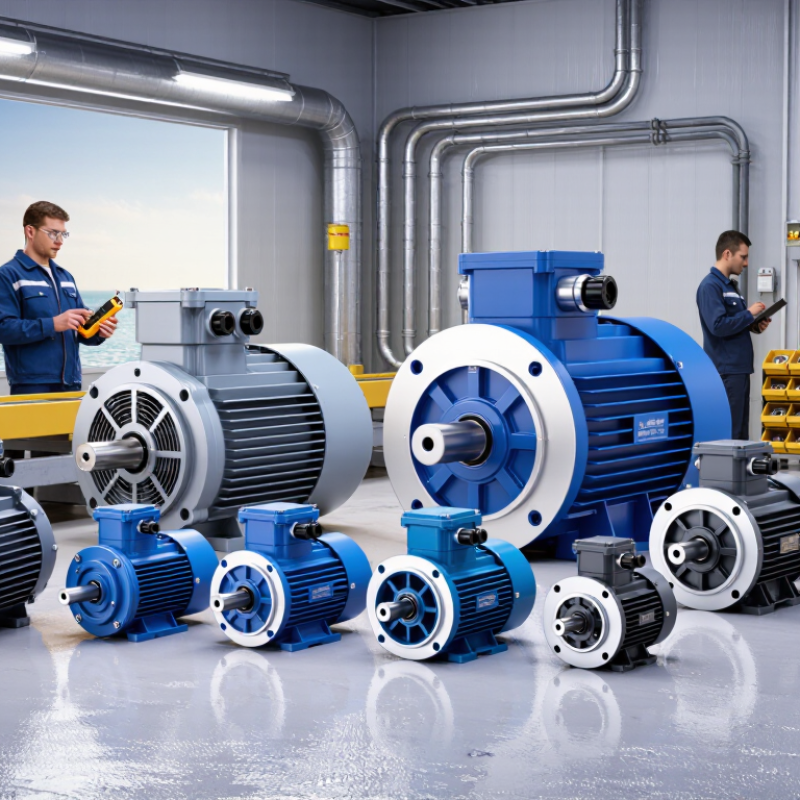
An asynchronous motor, often called an induction motor, converts electrical energy into mechanical rotation. Its rotor turns slightly slower than the rotating magnetic field. This difference is called slip. Without slip, the motor cannot produce torque. Most industrial models use a rugged squirrel-cage rotor, making them suitable for pumps, conveyors, compressors, and fans.
Global sourcing requires more than comparing purchase prices. Confirm the rated voltage, frequency, phase, power, speed, mounting position, and duty cycle before requesting quotations. A motor designed for 60 Hz may behave differently on a 50 Hz grid.
Check efficiency class requirements, insulation grade, cooling method, enclosure rating, and brake options. In dusty or humid facilities, an inadequate IP rating can cause early failure.
I have found that clear technical documents prevent costly misunderstandings. Ask for routine test reports, dimensional drawings, efficiency data, noise limits, material specifications, and traceable serial records. Supplier audits should examine winding processes, balancing equipment, bearing storage, and final inspection methods. Packaging also matters; moisture barriers and shock protection reduce damage during ocean transport. Local certification may differ by destination, so verify current electrical and safety requirements with an authorized testing body. A low-cost quote can hide unsuitable tolerances or weak after-sales support. I would still request a sample motor, because assumptions often survive spreadsheets but fail on the factory floor.
Identify Motor Specifications for Your Application
Start with the load. Define required torque, operating speed, acceleration time, and daily running hours before contacting suppliers. A conveyor carrying uneven boxes may need higher starting torque than its running torque suggests. Record the shaft load carefully. Small errors can create large heating problems.
Select the rated power with actual operating conditions in mind. Check voltage, frequency, phase, duty cycle, ambient temperature, altitude, and installation position. A motor running in a dusty workshop may require a different enclosure than one installed indoors. Cooling also matters. Do not guess.
For global sourcing, prepare a clear specification sheet and drawing. Include shaft dimensions, mounting details, terminal orientation, insulation class, efficiency requirements, and acceptable tolerances. Ask for routine test records, performance curves, and material details. Independent verification is useful when quantities are high. It can reveal vibration, noise, or starting-current issues that a catalogue cannot show. A trial unit should run under the real load, not only without load. That step is often skipped.
Consider the starting method and the connected equipment. Direct starting may cause voltage dips, while a controlled starter can reduce mechanical shock. Confirm compatibility with local electrical requirements and site conditions. Translation errors can also affect wiring instructions. Review every value with the supplier. Even experienced teams miss one detail sometimes. That is why revision-controlled documents, sample approval, and written acceptance criteria are essential for reliable motor selection.
2026 How to Choose Asynchronous Motors for Global Sourcing?
Compare Suppliers, Manufacturing Standards, and Certifications
Electric motors deserve careful sourcing. The IEA’s Energy Efficiency 2023 report states that motor systems consume more than half of global electricity. The U.S. Department of Energy also estimates motor-driven equipment uses about 25% of U.S. electricity. Small efficiency differences can therefore become major operating costs.
Compare suppliers using the same technical sheet. Check rated power, voltage, frequency, duty cycle, efficiency class, IP rating, insulation class, and temperature rise. Ask for routine test records, rotor balancing data, material traceability, and sample inspection results. IEC 60034-30-1 defines efficiency classes for many asynchronous motors. A supplier should explain the test method, not only print an efficiency number.
Certificates need careful reading. ISO 9001 supports process control, but it does not prove every motor meets its declared performance. Request valid certificates, issuing-body details, factory scope, and expiry dates. For target markets, confirm applicable conformity requirements, including CE, UKCA, or other regional rules. The IEA notes that efficient motor systems can reduce industrial electricity demand, yet poor installation can erase these gains. A common audit lesson is simple: the cheapest quote is rarely the lowest lifecycle cost. I would also challenge identical-looking samples; internal copper content, bearings, and varnish quality may differ. Sometimes, the paperwork looks better than the motor.
Compare suppliers by efficiency class, manufacturing standards, and destination-market certifications.
Reference basis: IEC 60034-30-1 efficiency-class framework; values shown are representative minimum efficiency figures for an 11 kW, four-pole, 50 Hz motor.
2026 How to Choose Asynchronous Motors for Global Sourcing?
Evaluate Total Cost, Quality Risks, and Supply Chain Factors
When sourcing asynchronous motors globally, purchase price is only the opening figure. Freight, import duties, inspection, installation, energy use, and service calls can change the decision quickly. A motor that costs 8% less may consume more electricity during continuous operation. Over several years, that difference can exceed the original saving.
Quality assessment should reach beyond certificates. Request test records for efficiency, temperature rise, vibration, insulation, and noise. Compare samples from different production batches, not only one showroom unit. Check shaft dimensions, bearing protection, terminal markings, and enclosure ratings against your equipment. In field projects, small dimensional errors have caused expensive alignment work. We also learned that a polished report cannot replace an independent inspection.
Supply chain resilience needs measurable evidence. Review production capacity, component availability, packaging standards, and realistic lead times. Ask how the supplier handles rejected batches and urgent replacement parts. Keep approved technical drawings and inspection criteria under version control. Dual sourcing may reduce disruption, but it can introduce performance variation. That risk needs a controlled validation process. Currency movement, port congestion, and seasonal capacity should enter the landed-cost model. Some estimates will be wrong. Recheck them quarterly.
Comparative sourcing matrix for three-phase squirrel-cage asynchronous motors. Values are practical planning benchmarks and must be confirmed against the final specification, applicable standards, installation conditions, and supplier documentation.
| Evaluation Dimension | Entry-Level Induction Motor | IE3 High-Efficiency Induction Motor | IE4 Super-Premium Induction Motor | Cast-Iron Heavy-Duty Motor | Explosion-Protected Asynchronous Motor | Global Sourcing Checkpoint |
|---|---|---|---|---|---|---|
| Typical Application | Light-duty pumps, fans, conveyors, and general machinery | Industrial pumps, fans, compressors, conveyors, and continuous-duty equipment | High operating-hour applications where energy cost is a major part of lifetime cost | Mining, process plants, crushers, conveyors, and high-vibration environments | Equipment installed in classified hazardous areas, subject to local certification requirements | Match the motor to load profile, duty cycle, ambient conditions, and required protection level rather than selecting on purchase price alone. |
| Common Efficiency Classification | IE1 or non-premium efficiency, where legally permitted | IE3 premium efficiency under IEC 60034-30-1 | IE4 super-premium efficiency under IEC 60034-30-1 | Typically IE3 or IE4, depending on frame size and design | IE2, IE3, or higher, depending on certification, construction, and applicable regulations | Request the declared efficiency at the rated output and verify the test method, tolerance, and certificate. |
| Typical Rated Power Range | 0.12–75 kW | 0.75–500 kW | 1.5–500 kW; availability varies by frame size | 11–1,000 kW or higher for special industrial designs | 0.12–1,000 kW or higher, subject to hazardous-area design and certification | Confirm whether the required power, frame, shaft dimensions, and mounting arrangement are standard or custom. |
| Typical Efficiency at Full Load | Approximately 80–94%, depending heavily on power and pole count | Approximately 85–96%, depending on power, pole count, and design | Approximately 88–97%, depending on power, pole count, and design | Approximately 90–97% for appropriately sized industrial motors | Approximately 85–96%; certification and flameproof construction can affect design efficiency | Use the actual efficiency curve when calculating annual energy cost; do not compare percentages across different power ratings without normalization. |
| Energy-Cost Position | Lowest initial price but highest operating cost among the listed options | Balanced purchase price and lifetime energy performance | Higher purchase price with the strongest energy-saving potential for long operating hours | Energy cost is generally similar to the selected efficiency class; mechanical robustness is the main value driver | Energy cost is secondary to legal compliance, safe operation, and correct hazardous-area certification | Calculate: annual energy cost = input power × operating hours × electricity tariff. Include partial-load efficiency where relevant. |
| Purchase Price Index | 100 | 110–135 | 125–165 | 130–190 | 180–350+ | Index is a planning benchmark only; it excludes freight, duties, certification, spare parts, and installation. |
| Estimated Manufacturing Lead Time | 2–6 weeks for standard specifications | 3–8 weeks for standard specifications | 5–12 weeks because of higher-efficiency magnetic, thermal, and production requirements | 6–14 weeks, especially for large frames or customized mechanical features | 8–20 weeks, depending on certification, testing, and documentation requirements | Ask suppliers to separate standard production time, approval time, testing time, and export documentation time. |
| Typical Minimum Order Quantity | 1 unit for stock items; lower risk for trial purchases | 1–5 units for standard sizes; project orders may require more | 1–5 units, with possible production allocation requirements for uncommon sizes | 1 unit, but custom mechanical designs may require engineering approval | 1 unit, subject to certification and documentation review | Prioritize suppliers that accept pilot orders and can maintain the same design for repeat purchases. |
| Typical Protection Level | IP55 is common for general industrial use | IP55 or IP56 is common; higher protection may be available | IP55 or IP56 is common; confirm thermal performance with the selected enclosure | IP55–IP66 depending on the environment and specification | Protection marking must match the hazardous-area classification; IP rating alone is not sufficient | Confirm IP rating under IEC 60529 and verify whether the site requires additional corrosion, washdown, or dust protection. |
| Insulation and Temperature Class | Class F insulation is common; temperature rise may be limited below Class F | Class F insulation is common with a Class B temperature-rise design in many standard products | Class F or higher thermal design; verify inverter-duty suitability where applicable | Class F or higher, with enhanced thermal and mechanical design options | Must meet the temperature-class and certification requirements for the hazardous location | Check ambient temperature, altitude, starting frequency, and variable-frequency-drive operation before approving the design. |
| Variable-Frequency Drive Compatibility | May require reinforced insulation, bearing protection, or derating for inverter operation | Usually available for VFD operation, but the supplier must confirm the insulation system | Confirm minimum switching frequency, cable length limits, bearing-current protection, and low-speed cooling | Often suitable, subject to shaft grounding, bearing selection, cooling, and torque requirements | VFD and motor certification must be assessed as a complete installation; standard compatibility statements are insufficient | Require a written VFD compatibility statement covering voltage spikes, cable length, speed range, and thermal derating. |
| Mechanical Service Risk | Higher risk of premature bearing, winding, or cooling-system failure if overloaded or poorly maintained | Moderate risk when correctly selected and maintained | Moderate risk; efficiency-focused designs may require tighter control of cooling and operating conditions | Lower mechanical risk in harsh environments when correctly specified, but heavier equipment increases handling requirements | High consequence of incorrect assembly, unauthorized repair, or missing certification | Review bearing life, shaft dimensions, balancing grade, vibration limits, lubrication method, and spare-part availability. |
| Quality Risk Level | High if documentation and process controls are weak | Medium; verify efficiency and routine-test records | Medium; verify design consistency and thermal performance | Medium; inspect castings, machining, balancing, and paint system | High consequence; certification authenticity and configuration control are critical | Use an approved sample, incoming inspection, serial-number traceability, and independent testing for critical projects. |
| Recommended Pre-Shipment Tests | Winding resistance, insulation resistance, no-load current, vibration, and visual inspection | Routine tests plus efficiency verification or a valid efficiency test report | Routine tests, efficiency verification, temperature-rise evidence, and VFD compatibility review | Routine tests, vibration, balance, bearing inspection, paint-thickness check, and dimensional inspection | Routine tests plus certification review, enclosure inspection, temperature-class verification, and required type-test evidence | Define acceptance criteria before purchase and state which tests require witnessed inspection or third-party verification. |
| Logistics and Handling | Low to moderate freight and handling cost | Moderate freight and handling cost | Moderate to high freight cost because of increased mass or special packaging in some designs | High freight, lifting, and storage requirements for large cast-iron frames | High documentation, packaging, customs, and compliance-handling requirements | Compare total delivered cost: EXW/FOB price + freight + insurance + duty + inland transport + inspection + installation. |
| Spare-Parts and Serviceability | Generally easy to source for common frame sizes | Good availability when standard IEC frames and bearings are used | Confirm availability of specialized rotors, bearings, cooling components, and replacement parts | Good serviceability, but large components may require specialized lifting and repair facilities | Repairs must preserve certification; unauthorized modifications can invalidate approval | Require a parts list, recommended service intervals, repair limits, and a minimum spare-parts commitment. |
| Best-Fit Sourcing Strategy | Use for low-duty, price-sensitive applications with limited annual operating hours | Default choice for most continuous-duty industrial applications | Use when annual operating hours, electricity tariffs, and energy targets justify the premium | Use when mechanical durability, environmental resistance, and uptime outweigh compactness or low initial cost | Use only after area classification, certification, installation, and maintenance requirements are fully defined | For 2026 sourcing, score suppliers on delivered cost, verified efficiency, quality controls, lead-time reliability, compliance, and lifecycle support. |
Supplier selection should begin with verified performance, not attractive quotations. The International Energy Agency reports that electric motor systems consume roughly half of global electricity. Small efficiency differences can therefore affect operating costs for years. Request tested efficiency, rated torque, insulation class, protection rating, noise data, and temperature-rise records. Match these figures with IEC 60034 requirements and the actual load profile.
A practical sourcing file should include drawings, material specifications, routine-test procedures, and production lead times. Ask whether the supplier can provide serial-number traceability. Independent pre-shipment inspection is useful, especially for first orders. It is not perfect. A factory sample may look excellent while later batches vary.
International procurement terms need equal attention. State the Incoterms 2020 rule, named delivery location, export documents, packaging method, and insurance responsibility. Define payment milestones around inspection or approved shipping documents. Include tolerances for vibration, voltage, shaft dimensions, and delivery delays. The U.S. Department of Energy notes that properly selected high-efficiency motor systems can reduce industrial energy use, making lifetime cost more important than purchase price.
Warranty language must specify response time, replacement duties, and evidence requirements. Clarify whether commissioning support is remote or on-site. Currency movements, port delays, and certification changes can weaken an otherwise sound contract. I would also score suppliers quarterly, using defect rates, response time, energy-test results, and delivery accuracy. A spreadsheet helps. Human judgment still matters.
It converts electrical energy into mechanical rotation. The rotor turns slightly slower than the magnetic field. This difference is called slip. Without slip, torque cannot develop.
Confirm voltage, frequency, phase, power, speed, mounting position, and duty cycle. Also check ambient temperature and altitude. Small omissions can cause large problems.
Start with the load. Record torque, speed, acceleration time, shaft load, and daily running hours. Uneven conveyor boxes may require higher starting torque. Do not guess.
Dusty or humid locations need suitable protection and cooling. A weak enclosure may allow moisture inside. Early bearing or winding failure can follow. Site conditions matter.
Request drawings, efficiency data, material details, performance curves, and routine test records. Serial-number records also improve traceability. Clear documents prevent expensive misunderstandings.
Yes, especially for a new supplier or large order. Test it under the real load, not only without load. A catalogue cannot reveal every vibration or starting-current issue.
Review winding processes, rotor balancing, bearing storage, and final inspection. Check production consistency, not just one attractive sample. Later batches can vary.
Define the delivery rule, named location, export documents, packaging, insurance, and payment milestones. Include limits for vibration, shaft dimensions, delays, and currency changes. Details protect both sides.
Track defect rates, response times, test results, and delivery accuracy each quarter. A spreadsheet helps. Human judgment still matters. Some warning signs appear only during operation.
Choosing Asynchronous Motors for global sourcing requires a structured evaluation of technical, commercial, and supply chain factors. Start by understanding how asynchronous motors operate and define the requirements of the target market, including voltage, frequency, power, speed, enclosure protection, mounting method, efficiency, and duty cycle. These specifications should match the application’s operating conditions and installation environment to ensure reliable performance.
Next, compare potential suppliers according to manufacturing capability, quality management, testing procedures, production capacity, certifications, and compliance with applicable international standards. Beyond the purchase price, assess total cost by considering energy efficiency, transportation, duties, maintenance, warranty support, lead times, inventory needs, and possible quality risks. Supplier stability, communication, documentation, and continuity planning are also essential for reducing procurement uncertainty. Before final selection, confirm product specifications, inspection requirements, delivery schedules, payment terms, warranty conditions, and other international procurement details in a clear contract. This approach supports a balanced decision based on performance, quality, cost, and long-term supply reliability.
