 Precision Micros
Precision Micros
Precision Micros
For global buyers, choosing a motor is not just a matter of comparing horsepower or purchase price. High Torque Motors must deliver controlled force at low speeds, handle repeated starts, and fit the demands of the driven equipment. A conveyor loaded with material, for example, places different demands on a motor than a mixer or hoist. The details matter.
The International Energy Agency’s 2011 report, Energy-Efficiency Policy Opportunities for Electric Motor-Driven Systems, estimated that motor-driven systems use about 46% of global electricity. That figure highlights why efficiency deserves attention alongside torque, duty cycle, and operating conditions. It is a broad estimate, not a guarantee of savings for any individual installation. Actual performance depends on the motor, drive, load, and maintenance.
Specifications can look convincing on paper. Real operating conditions are less tidy. A motor may face voltage variation, high ambient temperatures, frequent starts, or limited installation space. Buyers should compare rated and starting torque, speed range, efficiency, enclosure, serviceability, and available technical support. Independent test data and clear manufacturer documentation help make those comparisons more reliable. This guide reviews seven High Torque Motors for different buyer priorities, from industrial reliability to compact integration. It cannot replace application-specific engineering. That limitation deserves attention, too. A well-matched motor should perform consistently, not merely win a specification sheet comparison.
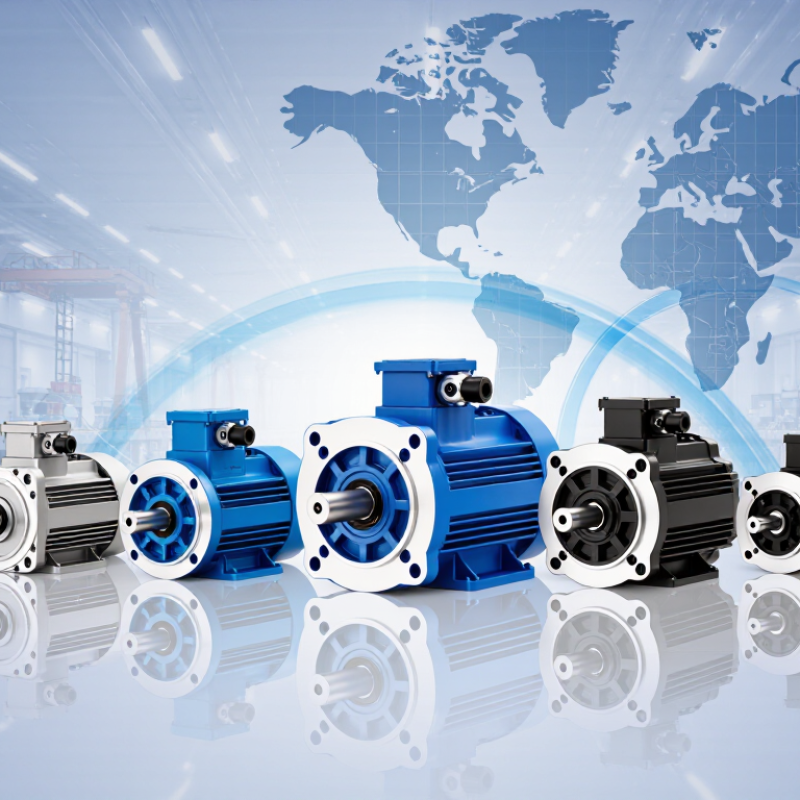
For global buyers, “high torque” should describe measurable performance, not a marketing label. Rated torque is the continuous twisting force a motor can deliver within its thermal limits. It helps size motors for conveyors, actuators, pumps, and other steady loads. A motor rated at 2 N·m may work reliably at that level, but only with suitable cooling, voltage, and speed. Check the duty cycle. Continuous duty and short intermittent duty are not interchangeable.
Stall torque is the peak force available when the shaft cannot rotate. It matters during startup or sudden resistance, yet it creates heavy current and rapid heat buildup. A motor with 6 N·m stall torque may not safely hold that load for more than seconds. Test the starting load, acceleration time, gearbox ratio, and controller limits together. This is where many selection sheets become optimistic. Do not treat stall torque as usable working torque.
Efficiency between 80% and 95% can reduce battery drain and enclosure heat, but efficiency changes with speed and load. Ask for an efficiency curve, not one attractive percentage. At 90% efficiency, 100 watts in produces about 90 watts mechanically; the remaining heat still needs a path out. Verify torque at the actual operating point, then confirm noise, temperature rise, shaft alignment, and service conditions. A small bench test is valuable. It may expose assumptions the datasheet hides.
| Motor Type | Typical Rated Torque | Zero-Speed / Peak Torque | Typical Efficiency | Best-Fit Applications | Key Selection Check |
|---|---|---|---|---|---|
| Brushless DC (BLDC) Planetary Gearmotor | About 0.2–100 Nm at the gearbox output | Short-duration peak is often about 2–3× rated torque; confirm the controller’s current limit and the gearbox’s allowable peak load. | Motor: commonly 85–95% near an efficient operating point. Gearbox losses reduce total system efficiency. | Robotics, conveyors, mobile equipment, and compact automation | Check continuous output torque, gearbox ratio, thermal limits, and duty cycle—not just motor torque. |
| AC Induction Helical Gearmotor | About 5–1,000 Nm at the geared output, depending on frame size and ratio | Starting or breakdown torque is commonly around 1.5–3× rated motor torque; it is not a continuous zero-speed rating. | Motor: roughly 80–94% at or near rated load, varying substantially with motor size and efficiency class. | Industrial conveyors, mixers, packaging lines, and general machinery | Verify supply frequency, starting method, service factor, and gearbox output rating. |
| Permanent-Magnet Servo with Planetary Reducer | About 0.5–300 Nm at the reducer output | Servo peak torque is often 2–3× rated torque for a specified short duration; it should not be treated as a continuous stall rating. | Motor: commonly 85–95% near rated operating conditions; drive and reducer losses are additional. | Machine axes, indexing, pick-and-place systems, and precision motion control | Compare peak-torque duration, feedback compatibility, reflected inertia, and reducer backlash. |
| Direct-Drive Torque Motor | About 1–1,000 Nm continuously, depending on motor diameter and cooling | Short-time peak torque is commonly around 2–3× continuous rated torque, subject to winding temperature and drive limits. | Often about 80–93% near its rated operating point; efficiency varies with speed, cooling, and load. | Rotary tables, gimbals, machine-tool axes, and low-speed precision drives | Assess continuous torque at the actual speed, cooling arrangement, and allowable winding temperature. |
| Brushed Permanent-Magnet DC Gearmotor | About 0.05–20 Nm at the gearbox output for common compact assemblies | Locked-rotor torque may be several times rated torque, but stall current can quickly overheat the winding, brushes, or gearbox. | Motor: commonly about 70–85% near a suitable operating point; brushes and gearing add losses. | Low-cost actuators, small handling equipment, and intermittent-duty mechanisms | Check stall-current protection, brush life, gearbox limits, and the permitted stall duration. |
| Geared Stepper Motor | About 0.1–50 Nm of practical output torque, depending on speed and duty | Holding torque is specified at standstill and is not equivalent to continuous running torque; available torque falls as speed rises. | Motor: often about 50–80%; it generally does not meet an 80–95% efficiency target. | Positioning systems where simple open-loop control and standstill holding are useful | Use the torque-speed curve and thermal rating; do not select from holding torque alone. |
| Synchronous Reluctance Geared Motor | About 10–1,000 Nm at the geared output in industrial configurations | Starting or breakdown torque varies by design and drive; confirm the manufacturer’s specified overload and starting characteristics. | Motor: commonly about 85–95% near rated load for suitable sizes and efficiency classes; system efficiency includes gearbox and drive losses. | Industrial pumps, fans, conveyors, and applications prioritizing energy use | Check inverter requirements, starting torque, operating speed range, and the efficiency rating at the intended load. |
How to compare torque: Rated torque is the torque a motor can deliver continuously under stated cooling and operating conditions. Stall torque is the zero-speed torque and is normally limited by current and temperature; for servo and induction motors, published peak or starting torque may be a more appropriate specification. The ranges above are broad category-level guides, not specifications for individual products. Efficiency figures are approximate motor-level ranges near suitable operating conditions; they are not guaranteed across the full speed range, and gearbox or drive losses can lower overall system efficiency.
Rated torque is the continuous twisting force a motor can provide within its thermal limits. Check cooling, voltage, speed, and duty cycle. Continuous means continuous.
No. Stall torque applies when the shaft cannot rotate, such as during startup. It can draw heavy current and build heat quickly. Treat it as a brief peak, not a steady load.
Ask for an efficiency curve across different speeds and loads. At 90% efficiency, 100 watts in produces about 90 watts mechanically. The remaining heat still needs to escape.
Compare the actual load, acceleration time, gearbox ratio, and controller limits. Verify torque at the operating speed. A small bench test can catch missed assumptions.
Matching torque does not guarantee matching dimensions. Measure shaft height, bolt spacing, and shaft diameter before ordering. A few millimeters can matter.
They describe protection against dust and water exposure. IP66 offers stronger protection than IP55. Cable glands and drainage still need attention.
Sometimes, but speed, cooling, current, and available torque can change. Check voltage settings and thermal limits. A 400 V, 50 Hz system is not automatically equivalent to 460 V, 60 Hz.
Request verified test data, starting-load details, and the intended duty cycle. Confirm local service support too. A datasheet can look reassuring, yet leave gaps. I would check twice.
Choosing the right High Torque Motors requires more than comparing peak power. This guide explains how rated torque, stall torque, torque density, operating speed, and duty cycle determine real-world performance, while also considering efficiency targets of approximately 80–95%. It classifies seven motor types according to their ability to deliver sustained force, handle overloads, and operate reliably in demanding applications.
The comparison also covers key international selection factors, including IEC 60034 standards, NEMA dimensions, IP protection ratings, and compatibility with 50 or 60 Hz power systems. Readers will learn how to match applications with 24–48 V DC motors, 230/400 V AC motors, or servo systems, depending on control precision and installation requirements. Finally, the seven options are ranked by torque output, reliability, cost, maintenance needs, and global availability, helping buyers make a practical and informed decision for industrial, automation, transportation, and heavy-duty equipment.
