Precision Micros
Choosing the right High Efficiency Motors can reshape a factory’s energy bill, maintenance schedule, and production reliability. A motor may run for 15 years, while its purchase price is paid once. John Malinowski, a recognized motor-systems specialist, has stated, “The purchase price of a motor is only a small part of its total cost of ownership.” That principle guides this 2026 guide for global buyers.
The market now extends beyond IE3 motors. IE4 and IE5 designs are gaining attention in pumps, fans, compressors, conveyors, and process equipment. Yet efficiency labels alone do not tell the whole story. Buyers should examine rated load, duty cycle, starting torque, inverter compatibility, enclosure protection, cooling method, and local service support. A motor operating far below its rated load may waste the advantage promised by its specification. Small details matter.
Real purchasing decisions often happen beside a noisy production line. Heat, dust, voltage variation, and limited installation space can change the result. IEC 60034-30-1 ratings provide useful comparison points, but independent test data remains valuable. Certification claims should be checked carefully. So should warranty terms and replacement lead times. This guide compares High Efficiency Motors through performance, lifecycle cost, application fit, and supplier credibility. It also recognizes an uncomfortable truth: the most efficient motor is not always the best choice. A poorly matched motor can create losses, delays, and regret. Good engineering requires measurement, not fashionable assumptions.
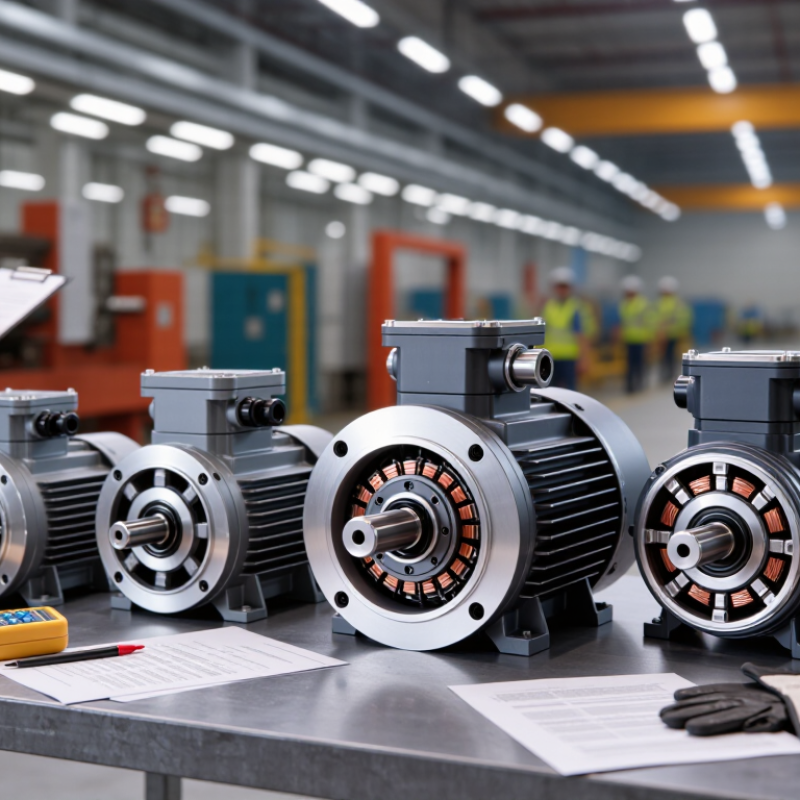
High-efficiency motors begin with a simple fact: the motor is only one part of the system. The International Energy Agency reports that electric motor-driven systems consume roughly half of global electricity. Small efficiency gains can therefore reduce operating costs across factories, pumps, compressors, and fans.
Buyers should read the rated efficiency, output, speed, duty cycle, and load profile together. The IEC 60034-30-1 standard classifies motors from IE1 to IE5. Testing under IEC 60034-2-1 improves comparison between products. Yet an IE4 motor may waste energy if it runs far below its intended load. A correct match matters more than a higher label alone.
Check the full operating picture. Variable-speed drives, transmission losses, starting current, cooling, and maintenance can change actual performance. The U.S. Department of Energy notes that motor systems offer major energy-saving opportunities through better sizing and controls. Field measurements are valuable: record current, voltage, running hours, and load before replacement. A spreadsheet can mislead. Real equipment behaves unevenly.
Some ratings remain difficult to compare across regions. Test conditions, tolerances, and local efficiency rules may differ. Buyers should request certified test data, thermal limits, bearing details, and service records. Pay attention to noise and vibration too. Efficiency is not the whole story. A motor that lasts longer, runs cooler, and fits the existing drive may deliver stronger lifetime value. Industry reports, including IEA Energy Efficiency 2023 and DOE motor-system guidance, support this practical approach.
Motor selection depends on the duty cycle, not efficiency labels alone. The IEA estimates that electric motor systems use about 53% of global electricity. In industry, pumps, fans, compressors, and conveyors often run for thousands of hours yearly. High-efficiency induction motors remain practical for rugged, continuous loads. Synchronous reluctance motors can reduce rotor losses and suit variable-speed drives. Permanent-magnet motors offer strong efficiency and compact size, especially in HVAC equipment and automated machinery. However, rare-earth material supply and control complexity deserve careful review.
The U.S. Department of Energy reports that motor systems account for more than half of industrial electricity consumption. This makes the drive, gearbox, controls, and maintenance schedule equally important. IEC 60034-30-1 efficiency classes help buyers compare tested motor performance. Yet laboratory ratings may not reflect dusty factories, frequent starts, poor alignment, or partial-load operation. A neat ranking is tempting, but it can mislead. Real sites are messier.
Tips: Measure operating hours, load patterns, voltage quality, and ambient temperature before choosing. Compare total cost over the motor’s service life, not only purchase price. Request verified efficiency data at 25%, 50%, 75%, and 100% load. Check service access and spare-part availability across the target market. When uncertain, test one motor under actual conditions before a large rollout.
Modern high-efficiency motors combine several technologies, not one magic component. The U.S. Department of Energy’s 2021 Motor Systems Market Assessment estimates that motor-driven equipment uses about 68% of electricity in American manufacturing. The International Energy Agency also reports that electric motor systems consume roughly half of global electricity. These figures make efficiency a purchasing priority.
IE3 and IE4 motors reduce losses through improved magnetic steel, better copper filling, and tighter manufacturing tolerances. IE5 designs often use permanent magnets or synchronous reluctance principles. Variable-frequency drives add another gain by matching speed with real demand. In a pump room, reducing speed slightly can cut power sharply. However, a higher efficiency class is not automatically better. My own procurement reviews sometimes overlook starting current, harmonics, cooling conditions, and repair skills. That mistake can erase expected savings.
Tips: Match the motor to its duty cycle, not only its nameplate rating. Request test results under IEC 60034-30-1 conditions. Check efficiency at 50%, 75%, and 100% load. Measure shaft power after installation. A motor running far below capacity may waste money, despite its impressive efficiency label. Temperature, dust, voltage imbalance, and frequent starts also matter. Collect operating data for several weeks before replacing equipment. The result may challenge the first assumption.
Choosing a high-efficiency motor starts with the real load, not the largest available rating. A pump running at 60% capacity needs different consideration than a conveyor operating near full load. Check the nameplate power, duty cycle, starting method, and expected operating hours. Oversizing can increase purchase costs and reduce efficiency during light-load operation. A smaller motor may overheat if the machine frequently starts under heavy resistance. Measure before deciding.
Tips: Record monthly running hours and local electricity rates. Compare efficiency at 50%, 75%, and 100% load. Include installation, controls, bearings, inspections, and disposal in the lifecycle calculation. IEC efficiency classifications provide a useful reference, but verified test data matters more than a sales claim. Ask for the test method, tolerance, and operating conditions.
Energy savings often look simple on paper. They are not. A 2% efficiency improvement may produce meaningful savings in a factory running continuously, but little value in occasional service. Variable-speed applications require extra care because drive losses, harmonics, cooling, and speed limits affect actual consumption. Review at least three years of operating data when possible. My earlier estimates sometimes ignored maintenance access and downtime, which made the “cheapest” motor more expensive later. Reliable evaluation combines measured performance, qualified installation, documented maintenance, and realistic operating assumptions.
2026 Top High Efficiency Motors for Global Buyers
Global buyers should treat compliance as a purchasing specification, not a final inspection. The IEC 60034-30-1 standard defines motor efficiency classes, including IE3 and IE4. However, national minimum energy performance rules may differ. Check the destination market, voltage, frequency, enclosure, and certification records before ordering. The IEA 4E Electric Motor Systems Annex estimates that motor systems use about 46% of global electricity. Small efficiency gaps can therefore create significant operating costs.
Supplier evaluation needs practical evidence. Request audited test reports, production traceability, warranty terms, and spare-parts availability. A reliable supplier should explain rotor balancing, insulation testing, bearing selection, and final-load testing clearly. Factory experience matters. So does communication. The International Energy Agency reports that industrial motor systems consume roughly 70% of industrial electricity. Buyers should compare lifecycle costs, not only purchase prices. A cheaper motor can become expensive after repeated downtime, freight delays, or unavailable bearings.
Maintenance planning should begin before installation. Confirm alignment tolerances, lubrication intervals, vibration limits, and compatibility with variable-speed drives. High-efficiency designs may run cooler, but poor ventilation still damages them. Use temperature sensors where the duty cycle is demanding. Keep vibration records. This is often missed. The U.S. Department of Energy’s motor-system guidance emphasizes system-level assessment, because pumps, fans, and compressors can waste more energy than the motor alone. IE4 is not automatically the best choice for every load. Buyers should model actual operating hours, starting conditions, harmonics, and repair capacity. My practical concern is simple: many procurement teams verify efficiency certificates, then neglect maintenance ownership.
Technical comparison framework for industrial motor sourcing, specification review, supplier qualification, and lifecycle planning.
| Motor Category | Typical Application | Common Power Range | Typical Efficiency Level | Electrical Configuration | Global Compliance Factors | Supplier Evaluation Points | Maintenance and Lifecycle Requirements | Buyer Suitability |
|---|---|---|---|---|---|---|---|---|
| Premium-Efficiency Low-Voltage Induction Motor | Fans, pumps, compressors, conveyors, machine tools, and general industrial equipment | 0.75 kW to approximately 1,000 kW | IE3 or IE4 Actual efficiency varies by rated power, speed, and design |
Three-phase AC; commonly 380–415 V at 50 Hz or 460–480 V at 60 Hz; 2-, 4-, 6-, or 8-pole designs | Verify IEC 60034-1 ratings, IEC 60034-30-1 efficiency class, local energy-efficiency rules, EMC requirements, and applicable safety marking | Request certified efficiency data, routine-test reports, dimensional drawings, insulation-class details, and evidence of stable production quality | Check bearings, cooling passages, terminal connections, vibration, and insulation resistance according to operating hours and site conditions | Best general-purpose option where reliability, availability, and energy savings must be balanced |
| Super-Premium-Efficiency Induction Motor | High-duty pumps, HVAC systems, process lines, high-load conveyors, and continuous-production machinery | Usually 0.75 kW to 1,000 kW | IE4 Often selected when long operating hours justify a higher purchase price |
Three-phase AC; fixed-speed or inverter-duty versions; compatible voltage and frequency must be confirmed before ordering | Confirm whether the required IE4 class applies to the motor rating and operating mode; review efficiency tolerance, test method, and national import requirements | Compare total cost of ownership rather than purchase price; confirm spare-bearing availability and repair support in the destination market | Use condition-based monitoring where possible; inspect bearings, shaft alignment, vibration, temperature, and cooling performance | Suitable for continuous operation, high annual running hours, and applications with measurable energy-saving potential |
| Permanent-Magnet Synchronous Motor | Variable-speed pumps, compressors, elevators, high-performance fans, robotics, and compact drive systems | Approximately 1 kW to several hundred kW | IE4 or IE5 High efficiency can be maintained over a broad speed range when correctly controlled |
Requires a compatible variable-frequency drive or integrated controller; rotor position and control strategy must be matched | Review motor-drive EMC compatibility, functional safety requirements, insulation-system suitability, and applicable electrical safety regulations | Evaluate controller compatibility, commissioning support, firmware availability, demagnetization protection, and technical documentation | Monitor bearings, encoder or sensor systems, cooling, and drive alarms; specialist repair may be required for rotor or control faults | Strong option for variable-speed applications where compact size and part-load efficiency are important |
| Synchronous Reluctance Motor | Industrial pumps, fans, compressors, material handling, and high-efficiency variable-speed systems | Approximately 1 kW to several hundred kW | IE4 or IE5 Performance depends strongly on the motor-drive combination |
Three-phase motor used with a matched variable-frequency drive; control parameters must be configured correctly | Check the complete motor-and-drive system against local efficiency, EMC, voltage, and machine-safety requirements | Confirm that the supplier provides a matched drive package, application-sizing software, commissioning procedures, and replacement compatibility | Motor maintenance is similar to induction motors, but drive diagnostics and parameter backup are especially important | Appropriate for buyers seeking high efficiency without permanent magnets in demanding variable-speed applications |
| Inverter-Duty Induction Motor | Variable-speed pumps, fans, extruders, conveyors, mixers, and process equipment | 0.75 kW to approximately 1,000 kW | IE3 or IE4 Efficiency depends on motor load, speed, and drive losses |
Designed for variable-frequency-drive operation; may require reinforced insulation, insulated bearings, or shaft-grounding provisions | Verify compatibility with IEC 60034-17 or IEC 60034-25 guidance, allowable voltage rise, switching frequency, cable length, and EMC controls | Request inverter-duty test data, recommended drive settings, bearing-current mitigation details, and cable-installation requirements | Inspect bearings and insulation more frequently in high-speed or long-cable installations; monitor common-mode current and vibration | Recommended where process control and energy savings depend on adjustable speed rather than fixed-speed operation |
| High-Temperature or Harsh-Environment Motor | Steel, chemical, cement, wastewater, food-processing, outdoor, and dusty industrial environments | 0.75 kW to approximately 500 kW | IE3 or IE4 Efficiency must be evaluated together with derating and environmental protection |
Three-phase AC; enclosure, cooling method, insulation system, and terminal protection selected for the site conditions | Confirm IP rating, ambient-temperature range, altitude derating, corrosion protection, hazardous-area certification where applicable, and hygienic-design requirements | Assess coating quality, sealing design, material traceability, environmental test records, and local service capability | Keep cooling surfaces clean, inspect seals and cable glands, check corrosion, and shorten inspection intervals in contaminated environments | Best for applications where environmental reliability is more critical than minimum initial cost |
| Explosion-Protected Motor | Oil and gas facilities, chemical plants, solvent handling, grain processing, and other classified hazardous areas | Typically 0.75 kW to several hundred kW | IE3 or IE4 Efficiency selection must not compromise the required protection concept |
Three-phase AC; protection type, gas or dust group, temperature class, and zone classification must match the installation | Require valid certification for the destination jurisdiction, correct zone or division classification, temperature class, cable entries, and installation method | Verify certificate scope, manufacturing traceability, authorized repair procedures, and availability of certified replacement components | Do not modify certified parts; follow prescribed inspection, enclosure-joint, terminal, bearing, and grounding procedures | Essential where flammable gases, vapors, mists, or combustible dusts create an explosion risk |
| Brake Motor | Hoists, cranes, elevators, indexing equipment, packaging machines, and emergency-stop applications | Approximately 0.12 kW to 200 kW | IE3 or IE4 System efficiency also includes brake and drive losses |
Three-phase AC motor with spring-applied or electrically released brake; brake voltage and control circuit must be specified | Review machinery safety, stopping-time, guarding, brake-torque, thermal, and electrical-control requirements | Confirm brake-torque test data, wear-part availability, manual-release design, replacement-brake compatibility, and service instructions | Inspect brake air gap, lining wear, release mechanism, spring condition, bearings, and stopping performance at defined intervals | Suitable when controlled stopping, holding, or load protection is a primary operational requirement |
Choose according to the real load, duty cycle, and operating hours. A pump at 60% capacity needs different sizing than a fully loaded conveyor. Measure first. Avoid choosing the largest available rating.
No. Higher efficiency can reduce energy use, but purchase and control costs may increase. A motor running continuously may justify the upgrade. An occasional-use machine may not. Real sites differ.
Record running hours, load patterns, voltage quality, ambient temperature, and starting conditions. Also note partial-load operation and speed changes. Three years of data is useful when available. Guesswork can mislead.
Request verified efficiency data at 25%, 50%, 75%, and 100% load. Check the test method, tolerance, and operating conditions. A single full-load figure may hide poor partial-load performance. That matters.
Include purchase, installation, controls, bearings, inspections, repairs, downtime, and disposal. Add electricity costs using local operating hours and tariffs. A cheaper motor may become expensive after repeated failures. My earlier estimates missed maintenance access sometimes.
Yes. Drive losses, harmonics, cooling, speed limits, and motor compatibility affect actual consumption. Review performance across the expected speed range. Test the motor under real conditions when possible. Paper savings are not enough.
Check the destination market’s efficiency rules, voltage, frequency, enclosure, and certification records. Confirm that documents match the exact motor model and configuration. Do this before shipment. Final inspection is too late.
Request test reports, production traceability, warranty terms, and spare-parts availability. Ask about insulation tests, rotor balancing, bearings, and final-load testing. Confirm alignment tolerances, lubrication intervals, and vibration limits before installation. Keep records.
Maintain ventilation, alignment, lubrication, and vibration monitoring. Use temperature sensors for demanding duty cycles. Inspect bearings before unusual noise becomes downtime. Efficiency certificates cannot replace maintenance ownership.
High Efficiency Motors are essential for global buyers seeking lower energy consumption, reliable performance, and long-term operating value. This article explains the fundamentals of motor efficiency, including performance ratings, load characteristics, power factors, and the importance of selecting a motor that matches the intended industrial or commercial application. It compares common motor types and examines how design choices affect starting performance, speed control, noise, durability, and adaptability.
The discussion also introduces modern efficiency technologies such as improved magnetic materials, optimized cooling systems, variable-speed operation, and advanced control methods. Buyers will learn how to assess rated power, actual energy use, maintenance requirements, and total lifecycle costs rather than focusing only on purchase price. In addition, the article highlights global purchasing considerations, including technical documentation, efficiency compliance, installation conditions, supplier reliability, spare parts availability, warranty support, and preventive maintenance planning. These factors help organizations make informed decisions and achieve dependable performance throughout the motor’s service life.
